
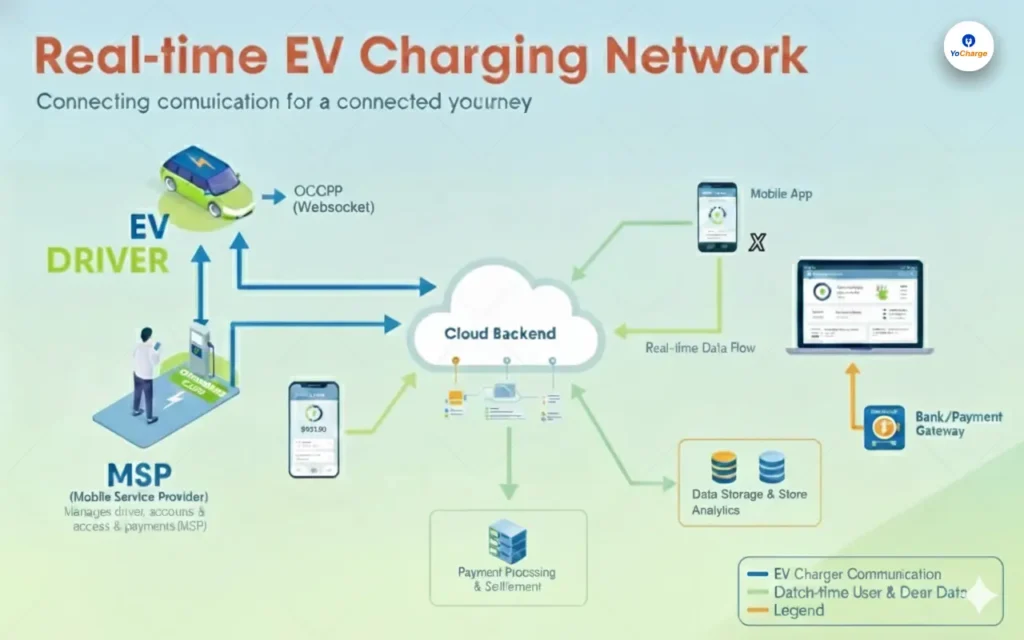
In the rapidly expanding world of electric vehicles (EVs), the ability to manage charging infrastructure efficiently and reliable is critical. For the companies operating large charging networks, the challenge extends far beyond deploying physical hardware.It require building a robust digital nervous system—one that can process, transmit, and react to information in real time.
In today’s connected ecosystem, users expects instant updates. In the context of EV Charging, real-time visibility is essential: charging session status, live notifications, fault alerts, and station availability must be updated without delay. Traditional HTTP-based request/responses models, while dependable, are not designed for continuous bidirectional communication. They fall short when immediacy and persistence are required.
At the core of EV Charging Platform, real-time infrastructure lies a foundational technology choice: OCPP (Open Charge Point Protocol) operating over WebSockets.
What are Websockets?
WebSockets are a real-time web technology that enables bi-directional communication, full-duplex communication between client and server over a persistent connection via Transmission Control Protocol (TCP) Connections.
The WebSocket protocol was standardized by the Internet Engineering Task Force (ITEF) as RFC 6455 in 2011.
Unlike HTTP, which follows a stateless request-response model. Websockets establish a persistent connection that allows both the client and server to send data at any time. This enables continuous, low-latency, bi-directional communication between client and server making WebSockets ideal for real-time Systems.
WebSocket are designed to work over standard HTTP ports 443 and 80, allowing them to pass easily through firewalls and proxies.
Limitations of Traditional HTTP Communication
Before WebSockets became widely adopted, real-time communication was typically implemented using techniques such as polling and long-polling:
- Polling: The client repeatedly send HTTP requests at fixed intervals to check for new data.
- Long-Polling: The client sends a request and the server holds the connection open until new data becomes available.
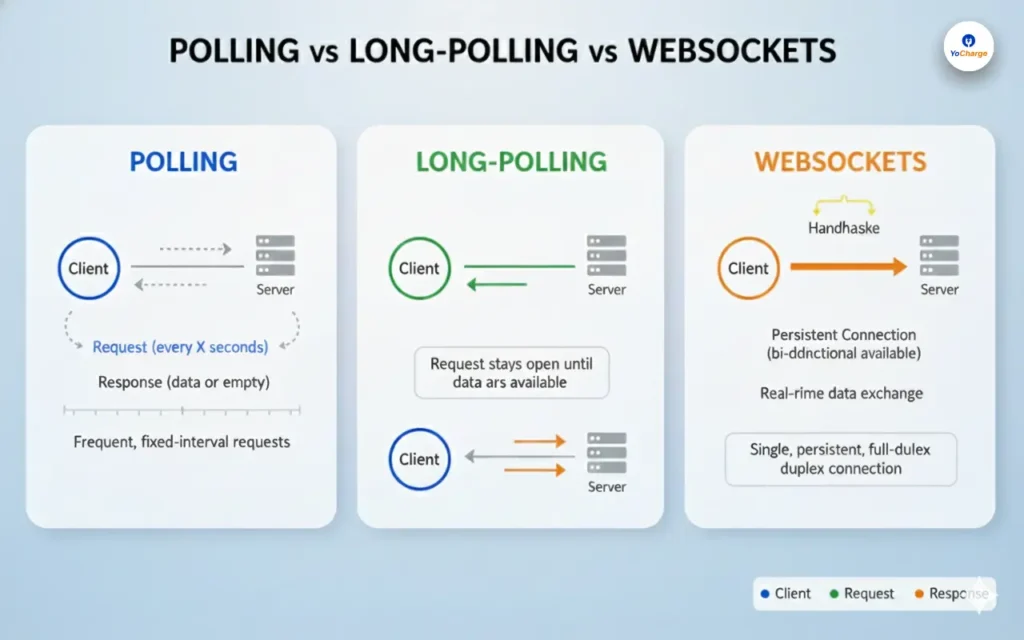
While functional, the approaches introduce several problems:
- Increased server load due to frequent requests
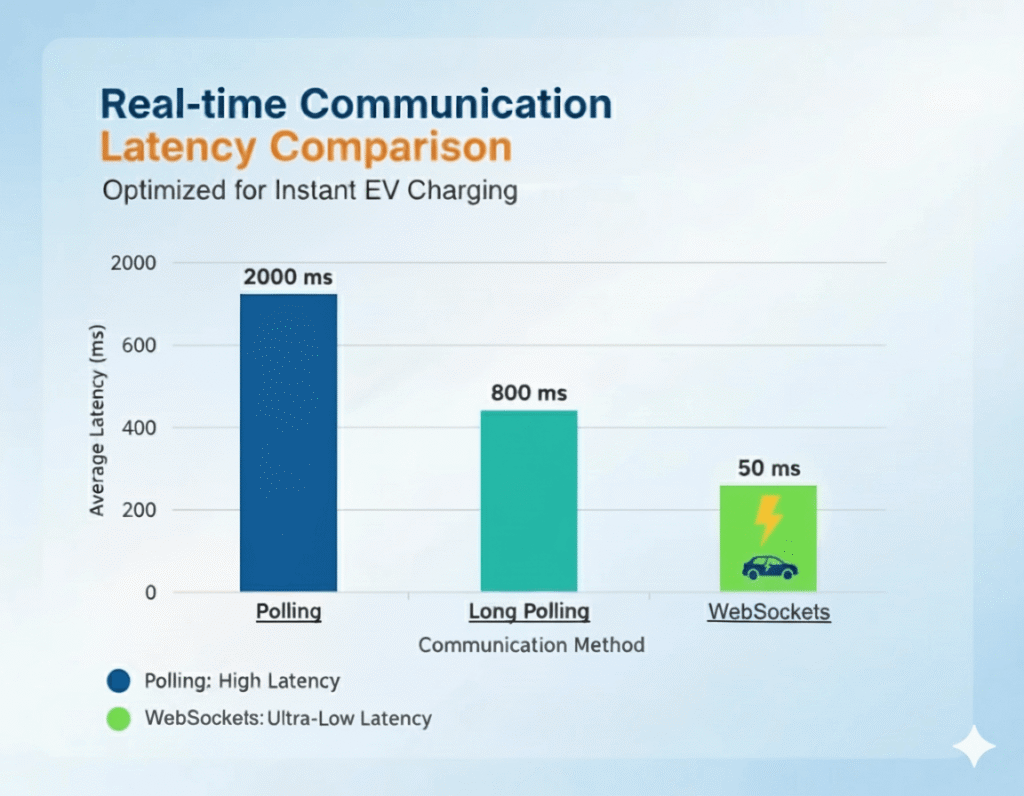
- Higher latency
- Inefficient use of network resources
- Complex implementation for bidirectional communication
With the introduction of WebSockets, these limitations were largely eliminated. A single persistent connection replaces repeated requests, reducing server overhead while enabling instant data delivery in both directions.
History and Evolution of the WebSockets
The concept of WebSockets emerged as a solution to the limitations of HTTP for real-time, bi-directional communication.
In 2008, Michael Carter, along with Ian Hickson, initiated discussions to design a protocol that could support persistent, low-latency communication between browsers and servers. Initially introduced under the name “TCP Connections” within the HTML5 specification, the protocol aimed to overcome the inefficiencies of AJAX-based polling and long-polling techniques.
During discussions within the WHATWG community, the protocol was later renamed WebSocket, a name that better reflected its purpose and behavior.
- 2009: Google Chrome 4 became the first browser to provide full WebSocket support.
- 2010: WebSocket adoption expanded across major browsers.
- 2011: The protocol was officially standardized by the IETF with the publication of RFC 6455 in December.
Since then, WebSockets have become a foundational technology for real-time applications across industries, including finance, gaming, messaging—and now, EV charging.
How http and WebSockets works in under the hood ?
HTTP Request (Traditional Request-Response): HTTP is a stateless, request–response protocol. When a browser sends an HTTP request to a server:
- A TCP Connection is established (or reused via keep-alive)
- The request contains:
- Methods (GET, POST, etc.)
- Headers
- Optional body
Authorization & Session:
- The Authorization header is used for authentication and verify the client.
- If Authorization is absent, The server may rely on sessions to verify the user usually tracked via cookies.
The response is always send back through the same TCP connection that initiated the request. Once the response is sent, The request lifecycle ends and for Another request require another round-trip
WebSocket Connection (Persistent, Full-Duplex):
WebSockets solve the inefficiency of repeated HTTP requests by enabling a persistent, bi-directional connection.
While creating the websocket connection, firstly the websockets is upgrade from the http request/https request while sending the request to the server via browser ne send the following headers:
GET /ws HTTP/1.1

Host: api.example.com

Upgrade: websocket

Connection: Upgrade

Sec-WebSocket-Key: <random_base64>

Sec-WebSocket-Version: 13
Here “Upgrade: websocket” tells the server that client want to switch protocols and “Sec-WebScoket-Key” is a randomly generated value used for validation.
The server accepts the upgrade request and switches the protocol to webscoket and keeps the connection open, then their no need for no reconnect and no re-handshake until the connection is closed.
Just to keep the connection alive the server sends the Ping to the client to check if the client is still online and client response with the Pong.
The Server Response with:
HTTP/1.1 101 Switching Protocols

Upgrade: websocket

Connection: Upgrade

Sec-WebSocket-Accept: <hashed_key>
Browser changes made:
Before while creating the http request browser doesn’t have the special headers “Upgrade” later the websocket connection were introduced the browser has added the special headers of “Upgrade” to know that that want to switch the internal networks stack from http mode to websocket mode and stop using the http rules and starts using websocket framing. Also added the Sec-WebSocket-Key for additional cryptographic validations.
Then browser send the request to the server and wait for the response from the server of “101 Switching Protocols”. And browser checks for the response status with 101 and matchs the Sec-WebSocket-Accepts and matches hash. If hash matchs with the Sec-WebSocket-Key then it validates the protocol switch else it will close the connection.
Application of WebSockets
WebSockets are widely used in modern software systems that require real-time, low-latency, bidirectional communication between clients and servers. Their ability to maintain persistent connections makes them suitable for a broad range of applications across industries.
Some common applications of WebSockets include:
Real-Time Notifications:
WebSockets enable instant delivery of notifications without requiring the client to continuously poll the server. This is commonly used for:
- System alerts
- Status updates
- Live activity notifications
Because the connection remains open, updates are pushed to the client as soon as they occur.
Chat and Messaging Applications:
WebSockets are a natural fit for real-time messaging systems, enabling:
- Instant message delivery
- Typing indicators
- Online/offline presence updates
This allows for a smooth, interactive communication experience similar to native messaging platforms.
Online Gaming and Multiplayer Systems:
In online and multiplayer games, real-time interaction is critical. WebSockets enable:
- Real-time player movement updates
- Game state synchronization
- Low-latency event handling
Persistent connections help maintain smooth gameplay experiences.
Financial Trading and Live Market Data:
WebSockets are commonly used in financial systems to stream live data such as:
- Stock prices
- Market indices
- Order book updates
Low latency and high throughput make WebSockets suitable for time-sensitive financial applications.
Collaborative Applications:
WebSockets power collaborative tools where multiple users interact with shared data in real time, such as:
- Document editing platforms (such as, google doc, etc)
- Whiteboards
- Whiteboards
Changes made by one user can be broadcast instantly to others.
WebSockets Security: WS vs WSS:
WS:
- WS stands for Websocket which works over the HTTP port 80
- It does not provide encryption.
- It is suitable for non-sensitive data transmission.
WSS:
- WSS stands for WebSocket Secure which works over the HTTPS port 443
- It uses SSL/TCP for the encryption.
- It is suitable for sensitive and helps in data protection while transmission.
Why WebSockets Are Essential for EV Charging
EV charging systems are inherently event-driven and stateful. A charging station must maintain a long-lived connection with the backend to:
- Report real-time status updates
- Send charging session events
- Transmit meter values
- Receive remote commands instantly
WebSockets provide the reliability and responsiveness required to support these operations at scale, making them a natural fit for protocols like OCPP.
Why WSS Is Important for EV Charging Systems:
EV charging platforms exchange sensitive information, including:
- Charger identity and authentication data
- Charging session and transaction details
- Remote control commands
- User and operational data
Using WSS ensures:
- End-to-end encryption of data in transit
- Protection against man-in-the-middle attacks
- Secure authentication between chargers and backend services
- Compliance with modern security standards
For large-scale, internet-connected charging networks, secure communication is not optional—it is essential.
WebSockets as the Backbone of EV Charging Real-Time Platform
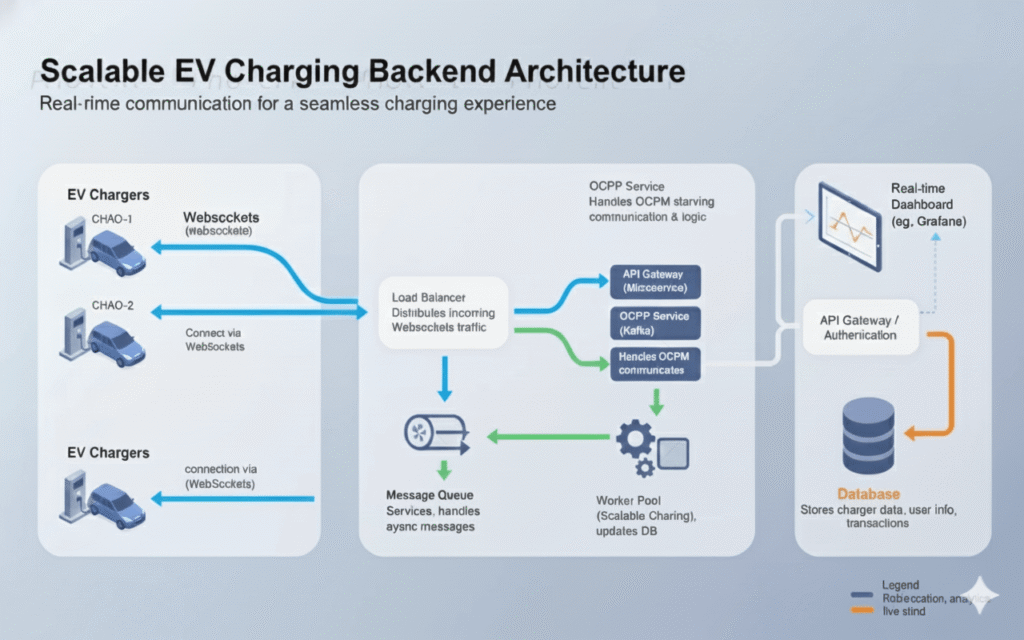
At EV platform, WebSockets form the backbone of our real-time communication layer. Every charging station maintains a persistent WebSocket connection with our backend, allowing seamless two-way communication.
This enables:
- Instant session state updates
- Real-time energy consumption tracking
- Remote start and stop commands
- Fault detection and alerts
- Live updates to user applications and admin dashboards
By leveraging WebSockets with OCPP, EV charging platform ensures that every charger remains continuously connected, responsive, and manageable—forming a true real-time nervous system for our EV charging network.
Conclusion
As EV adoption continues to accelerate, the reliability and responsiveness of charging infrastructure become increasingly important. Real-time communication is no longer a luxury—it is a necessity.
By embracing WebSockets as a core architectural component, EV charging platform, has built a scalable, resilient, and real-time platform capable of supporting thousands of connected chargers. This foundation enables better user experiences, faster operational responses, and ultimately, greater trust in EV charging ecosystems.