
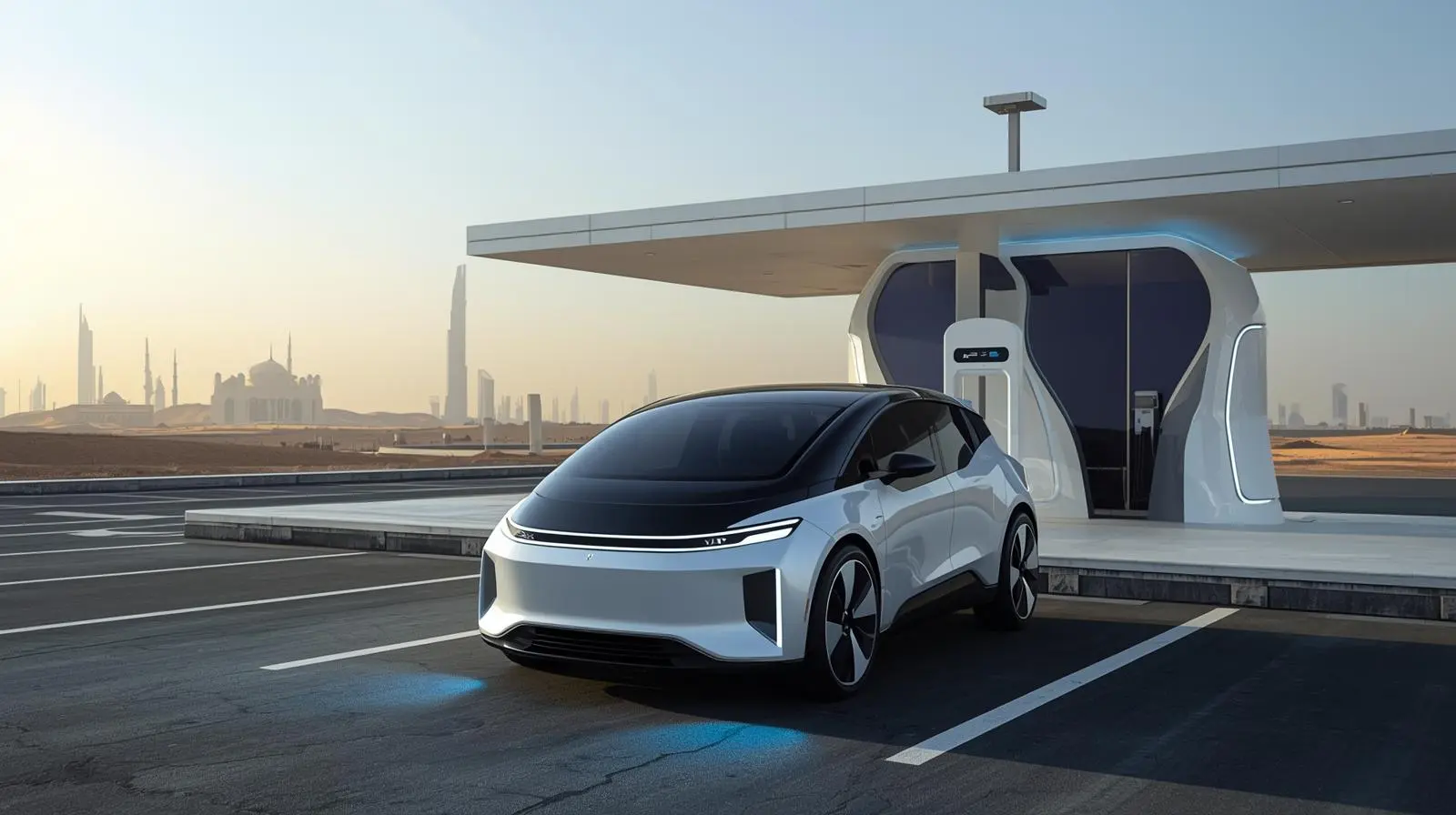
Fleet Electrification in Saudi Arabia
Saudi Arabia’s transformation from the world’s largest oil producer to a pioneering hub of electric mobility represents one of the most significant strategic pivots in modern economic history. The Kingdom’s Vision 2030 initiative has positioned fleet electrification as a cornerstone of its sustainability agenda — driving unprecedented investments, domestic EV manufacturing, and a rapidly expanding charging network across the region.
Saudi Arabia ranks 23rd in Arthur D. Little’s 2023 Global Electric Mobility Readiness Index (GEMRIX), signalling meaningful progress and a strong foundation for large-scale EV adoption.
🔑 Fleet Electrification in Saudi Arabia – Key Highlights at a Glance
- Target: 30% of all Riyadh vehicles to be electric by 2030
- USD 50 billion+ committed to EV manufacturing & infrastructure over the next decade
- PIF invested USD 39 billion specifically for the electric mobility ecosystem
- EV registrations surged 425% between 2021–2023 (375 → 12,000+ vehicles)
- EVIQ targeting 5,000 fast chargers across 1,000+ locations by 2030
- Domestic EV production capacity target: 310,000 units by 2030 (CEER + Lucid)
Background
Saudi Arabia is the GCC’s largest automotive market — accounting for over half of all new regional vehicle sales — and is rapidly advancing its green mobility agenda under Vision 2030. Through the Saudi Green Initiative launched in 2021, the Kingdom set a bold target for 30% of vehicles in Riyadh to be electric by 2030.
🚗 Domestic EV Manufacturing
- CEER — Saudi Arabia’s first homegrown EV brand (PIF × Foxconn), targeting 150,000 EVs/year by 2025
- Lucid Motors — PIF holds 65% stake; first overseas plant in King Abdullah Economic City; KSA committed to purchasing 100,000 Lucid EVs over 10 years
- Combined domestic capacity target: 310,000 units by 2030
⚡ Charging Infrastructure Push
- EVIQ (PIF + Saudi Electricity Company JV) — plans 5,000 fast chargers across 1,000+ locations by 2030
- Partnerships with Electromin & ABB expanding the public network; Electromin has deployed 100 stations with free charging incentives
- Strategy mirrors Norway’s ecosystem approach — lowering total cost of EV ownership
Vision 2030: The Strategic Framework for Sustainable Mobility
Sustainability Goals & Emission Targets
Vision 2030, launched in 2016, establishes Saudi Arabia’s commitment to achieving net-zero carbon emissions by 2060 while diversifying its economy away from oil dependency. Key mobility targets include:
30%
of Riyadh vehicles electric by 2030
50%
reduction in carbon emissions in the capital
278M
tons of annual CO₂ reductions via Saudi Green Initiative
25%
of goods transport vehicles to be autonomous/electric by 2030
Economic Diversification Through Electrification
The economic rationale behind fleet electrification extends well beyond environmental goals. The Kingdom has made massive commitments to build a homegrown EV economy:
| Investment Area | Amount (USD) |
|---|---|
| Total EV & Infrastructure Commitment | 50 billion+ |
| PIF Electric Mobility Ecosystem (total) | 39 billion |
| EV Manufacturing | 18 billion |
| Battery Ecosystem Development | 9 billion |
| Chips & Components | 12 billion |
| Expected FDI attracted | 150 million |
| Jobs to be created | ~30,000 |
Giga-Projects as Electric Mobility Catalysts
Saudi Arabia’s flagship giga-projects are serving as real-world proving grounds for large-scale fleet electrification — demonstrating viability in the challenging Arabian climate.
🏙️ NEOM — The Future of Sustainable Transportation
NEOM, Saudi Arabia’s flagship USD 500 billion smart city project, serves as a living laboratory for advanced electric mobility. It is already implementing:
- Eight Swedish Candela P-12 electric hydrofoil passenger ships for waterborne transport (delivery from 2025)
- Hyundai hydrogen bus testing programs as part of clean transport initiatives
- Comprehensive autonomous & electric vehicle integration throughout the city’s transport network
- Estimated ~20,000 construction vehicles at peak — creating immediate EV/hybrid commercial demand
🌊 Red Sea Global — Setting Industry Standards
Red Sea Global (RSG), developer of The Red Sea and AMAALA projects, has achieved several Saudi-first milestones in fleet electrification:
- Saudi Arabia’s first-ever fleet of carbon-neutral electric buses
- Fleet includes two vehicle types — smaller vehicles with 250 km range and larger buses with 350 km range
- Target of carbon neutrality by 2030 with comprehensive electric transport networks
Government Policies Accelerating Fleet Electrification
Financial Incentives & Regulatory Support
The Saudi government has implemented a comprehensive incentive structure to accelerate fleet adoption:
| Incentive | Detail |
|---|---|
| Licensing fee subsidy — BEV | Up to 50% subsidy on licensing fees |
| Licensing fee subsidy — Hybrid | 24% subsidy |
| Import duty | Customs duty exemptions for imported electric vehicles |
| Road tax & VAT | Road tax exemptions and reduced VAT rates |
| Parking | Free parking in designated areas for EVs |
Charging Infrastructure Development
- ⚡ EVIQ established as a PIF + Saudi Electricity Company joint venture
- ⚡ 5,000+ fast chargers planned across 1,000+ locations by 2030
- ⚡ Strategic highway charging corridors: Riyadh–Qassim, Riyadh–Dammam, and Mecca–Madinah routes
Status of Fleet Electrification in Saudi Arabia — 2025
Overall Fleet Composition
14.5M
vehicles projected by 2035
75% / 25%
Passenger vs. commercial vehicle split
425%
EV registration growth (2021–2023)
65%
of Saudi citizens interested in buying an EV within 3 years
Commercial Vehicle Market
| Metric | 2025 | 2030 (Projected) |
|---|---|---|
| Commercial vehicle sales | 141,900 units | Growing at 6.05% CAGR |
| Market size | USD 7.24 billion | USD 9.71 billion |
| Light commercial vehicle share | 41.33% | — |
| Electric & hybrid commercial CAGR | 8.76% through 2030 | |
| Corporate EV fleet additions | 50,000 EVs expected | — |
Fleet Electrification Projections
Based on PwC analysis and government targets, fleet electrification is set to accelerate dramatically across both passenger and commercial segments:
📅 2025 — 15% of new vehicle sales in major cities to be electric
📅 2030 — 30% of all vehicles in Riyadh to be electric; electric buses in 4+ cities
📅 2035 — Over 60% of new vehicle sales electric; 3+ million EVs on Saudi roads
Challenges to the 2030 Vision
🏗️ Infrastructure Gap
- Only ~285 public charging points by end of 2023
- 160,000 charging stations needed by 2035 to support 3.3M EVs
- Substantial investment gap remains to meet demand projections
🌡️ Climate Challenges
- 23% range reduction at 40°C vs. optimal 20°C performance
- Battery degradation in extreme heat requires advanced thermal management
- Charging speed reduction during high-temperature conditions
🔋 Battery Supply Chain
- Target: 187,500 EV battery units/year at 80 kWh each (= 15 GWh)
- Two-thirds of batteries will need to be imported
- USD 9B secured for batteries, metals & minerals (EV Metals: USD 900M; Ivanhoe Electric: USD 126M)
How YoCharge is Enabling the Transition
YoCharge, as a global EV Charging & Energy Management SaaS, is already active in Saudi Arabia through partnerships with multiple CPOs and fleet companies — positioning itself as a strategic enabler for Vision 2030’s fleet electrification goals.
☁️ Unified Charging Cloud
- Integrates multiple Saudi CPO networks into a single platform
- Fleet operators need only one API integration to access chargers Kingdom-wide
🗺️ Smart Fleet Management
- Smart routing to available chargers
- Reservation & queue management to reduce downtime
- SOC-based (State of Charge) dynamic planning
💳 Energy Contracts & Billing
- Manages energy transactions, invoicing & reconciliation between fleets and CPOs
- Fleets get transparent, predictable charging costs — no multi-provider negotiations
📡 High-Uptime Network
- Proactive uptime monitoring across all integrated CPO partners
- Drivers spend less time searching for chargers and more time on the road
Strategic Impact on Fleet Electrification in Saudi Arabia
- ✅ Vision 2030 compliance — enabling fleets to meet electrification mandates seamlessly
- ✅ Cost savings — optimized charging schedules and simplified billing reduce operational overhead
- ✅ Driver satisfaction — reduced downtime and easy charger access improve retention
- ✅ Data-driven operations — usage analytics, charging patterns, and energy cost insights at a glance
With multiple CPOs already live in Saudi Arabia, YoCharge is expanding its network to cover key logistics hubs, airports, and urban centers. By offering plug-and-play solutions for electric fleets, YoCharge is ensuring that electrification in Saudi Arabia moves from policy to practice.
Ready to Electrify Your Fleet in Saudi Arabia?
Talk to our Saudi Arabia EV experts and see how YoCharge can power your fleet’s Vision 2030 journey. We’ll analyse your fleet requirements and build a practical electrification roadmap.
YoCharge provides EV fleet management and charging infrastructure software for fleet operators in Saudi Arabia, supporting Vision 2030 fleet electrification goals.
The Path Forward
Fleet electrification in Saudi Arabia under Vision 2030 represents a comprehensive transformation of the Kingdom’s transportation sector. With over USD 50 billion in committed investments, ambitious domestic manufacturing targets, and supportive government policies, the Kingdom is positioning itself as a regional leader in electric mobility.
The convergence of economic diversification goals, environmental sustainability targets, and technological innovation through projects like NEOM and Red Sea Global creates a unique ecosystem for success. While challenges remain in infrastructure development and climate adaptation, Saudi Arabia’s substantial financial resources and strategic partnerships with global automotive leaders provide a strong foundation for achieving its 2030 targets.
The transformation from a nation of 375 electric vehicles in 2021 to a projected 3+ million EVs by 2035 represents one of the most ambitious and rapid fleet electrification programs globally — demonstrating Saudi Arabia’s commitment to redefining its role in the global energy and mobility landscape.