
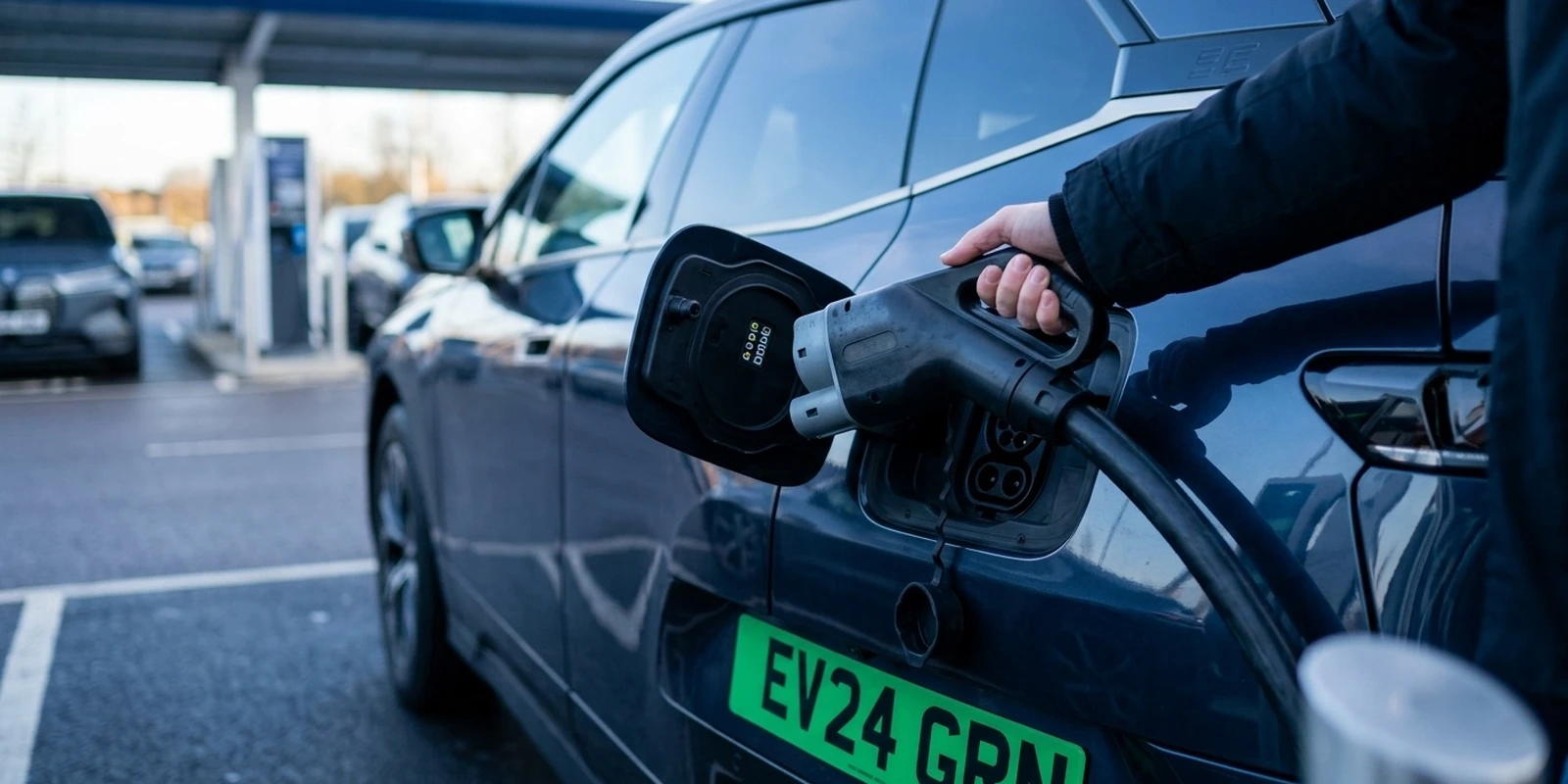
ISO 15118-20 vs ISO 15118-2: The Plug & Charge Roadmap
💡 ISO 15118-20: Key Highlights
- ISO 15118-20 adds bidirectional V2G/V2H/V2B power flow, TLS 1.3 mutual authentication, and multi-contract support — capabilities ISO 15118-2 (2014) was never designed to carry.
- The EU’s AFIR mandates ISO 15118-2 on all new public AC charging points from January 8, 2026, and ISO 15118-20 on all new public and private chargers from January 1, 2027.
- DIN SPEC 70121 — the DC-only precursor with no TLS and no Plug & Charge — is being phased out as ISO 15118 completes its takeover of DC fast-charging communication.
- Fewer than 10 labs worldwide currently offer full ISO 15118-20 conformance testing, with 6–9 month lead times — a bottleneck to build into any hardware RFP today.
- Most existing ISO 15118-2 charger boards cannot be firmware-flashed forward to -20 — the larger TLS 1.3 certificates and secure-element requirements typically demand a hardware refresh, not a patch.
Every CPO and eMSP evaluating a hardware refresh or vendor RFP this year eventually runs into the same question: does new charging equipment need to support ISO 15118-20, or is the current ISO 15118-2 deployment still good enough? The honest answer depends on your market, your V2G roadmap, and your procurement timeline — and getting it wrong in either direction is expensive, either through premature over-spec or a hardware refresh you didn’t budget for.
This is a technical-decision-maker’s guide, not a spec walkthrough. If you’re a CPO or eMSP technology lead weighing a platform roadmap, or a hardware/procurement stakeholder writing the next charger RFP, this post lays out what actually changes between ISO 15118-2, its DIN SPEC 70121 predecessor, and ISO 15118-20 — and gives you a straight framework for deciding whether to move now or wait.
What ISO 15118-2 Handles Today — And Where DIN 70121 Fits
ISO 15118-2, published in 2014, is the current, widely-deployed Plug & Charge standard for both AC and DC charging. The vehicle and the charger authenticate over Power Line Communication (PLC) using X.509 digital certificates — no RFID card, no app tap, no membership fob. The driver plugs in, the session authenticates and bills automatically, and that’s the whole interaction. It supports optional TLS (version 1.2) for the Plug & Charge handshake, and in practice almost every real Plug & Charge deployment runs it, since the certificate exchange depends on it.
DIN SPEC 70121: the DC-only predecessor still running in the field
DIN SPEC 70121 (2012–2014) was Germany’s pragmatic stopgap — a DC-only communication dialect that let early CCS fast chargers exchange charging parameters before ISO 15118-2 was ready to ship. It has no TLS, no digital certificates, and no Plug & Charge capability; it simply negotiates voltage, current, and charging-mode basics between vehicle and charger. A meaningful share of CCS DC hardware installed before roughly 2018–19 still runs DIN 70121 only, and most modern chargers keep it as a fallback compatibility mode for older EVs that never got an ISO 15118-2 software update.
For most CPOs today, this is the baseline: if your DC hardware shipped in the last several years, it almost certainly speaks ISO 15118-2 already, with DIN 70121 running underneath as a legacy handshake for older vehicles. That baseline is not what the newer standard changes — what changes is everything Plug & Charge was never built to do in the first place.
| Dimension | DIN SPEC 70121 | ISO 15118-2 | ISO 15118-20 |
|---|---|---|---|
| Published | 2012–2014 | 2014 | 2022 |
| Charging modes | DC only | AC and DC | AC, DC, wireless (WPT), pantograph |
| Plug & Charge | Not supported | Supported (single contract) | Supported (multiple simultaneous contracts) |
| Security layer | None | Optional TLS 1.2 | Mandatory mutual TLS 1.3 |
| Bidirectional power (V2G/V2H/V2B) | No | No | Yes |
| Field status, 2026 | Legacy fallback only | Current field standard | Emerging, mandated in the EU from 2027 |
Comparison of the three DC/AC charging communication standards a CPO is likely to encounter across a mixed hardware fleet in 2026.
What ISO 15118-20 Actually Adds
ISO 15118-20, finalized in 2022, is not a point release — it’s a second-generation communication standard built for a grid-interactive charging network rather than a one-directional fill-up. Three changes matter most for a CPO’s decision.
Bidirectional power flow: V2G, V2H, V2B
ISO 15118-20 is the first version of the standard that can carry a discharge session, not just a charge session. It defines Vehicle-to-Grid (the EV exports power back to the public utility grid through the charger), Vehicle-to-Home (the EV powers household loads directly), and Vehicle-to-Building (the EV supplies a commercial building’s loads). None of this is possible on ISO 15118-2 — the message set simply has no concept of the EV as a power source, only as a load.
Mandatory mutual TLS 1.3 and larger certificates
Where ISO 15118-2 treats TLS as an optional add-on for Plug & Charge, ISO 15118-20 makes mutual TLS 1.3 authentication mandatory for every session. That means both the vehicle and the charging station always authenticate each other with certificates — tighter security, but also materially larger certificate payloads and a heavier cryptographic workload than most ISO 15118-2 secure elements were designed to carry.
Multiple simultaneous contracts and dynamic control
This is the detail that matters most for fleet operators: a single EV can now present more than one e-mobility contract certificate at once, and let the charging station pick the right one based on tariff, roaming agreement, or whether the vehicle is charging at a company depot versus a driver’s home. A fleet vehicle can carry both a corporate billing contract and a personal one without the driver doing anything. The newer standard also introduces a “Dynamic” control mode, where the EV yields charging-rate control to the station’s backend entirely — useful for load-balanced depot charging and demand-response participation without driver input. It adds wireless power transfer (WPT) and pantograph docking for automated bus charging too, though those matter mainly to transit-specific hardware.
The Regulatory Clock: AFIR’s 2026 and 2027 Deadlines
The reason this comparison isn’t purely academic is the EU’s Alternative Fuels Infrastructure Regulation (AFIR), Regulation (EU) 2023/1804. It sets binding hardware deadlines, not guidance: ISO 15118-2 support is required on all new public AC charging points from January 8, 2026, and ISO 15118-20 support is required on all new public and private chargers — AC and DC — from January 1, 2027. For any CPO or hardware OEM shipping into the EU or UK, that second date is closer than it looks once you account for an 8–14 month hardware design cycle.
Outside the EU, the mandate isn’t legally binding — yet. AFIR applies to hardware entering the EU/UK market. CPOs in India, the US, and other markets aren’t under a direct legal deadline. But the component supply chain for CCS charging controllers, secure elements, and PLC modems is largely global — as EU-facing OEMs re-tool their production lines for ISO 15118-20 compliance, that hardware increasingly becomes the default SKU sold everywhere, whether or not the local market requires it yet.
Hardware and Certification Reality in 2026
Concretely, an ISO 15118-20-compliant charger needs a PLC-capable CCS communication controller, a secure element sized for TLS 1.3 and its larger certificates, a full TLS 1.3 stack, backend integration through OCPP 2.0.1 or newer, and a signed relationship with at least one PKI root certificate authority (Hubject and Eonti are the two most commonly cited today). That backend requirement is worth flagging on its own — if your CPMS platform hasn’t made the OCPP 2.0.1/2.1 jump yet, that upgrade decision and this one are really the same conversation; we cover the OCPP side of that roadmap separately in our OCPP 2.1 vs OCPP 2.0.1 upgrade guide.
The hardware refresh problem: most ISO 15118-2 charger boards cannot be firmware-flashed forward to ISO 15118-20. The jump from optional TLS 1.2 to mandatory mutual TLS 1.3, plus the larger certificate footprint, generally exceeds what the existing crypto-processor and secure element on older boards can handle. Budget for it as a hardware line item, not a software update.
Testing capacity is the other bottleneck. Fewer than ten labs worldwide are currently accredited for full ISO 15118-20 conformance testing, and booking a slot runs 6–9 months out. CharIN — the industry body that governs interoperability testing for the standard — is running “Testivals” in Sacramento (North America) and South Korea (Asia) through 2026 specifically to give vendors real-world interoperability checks ahead of formal certification schemes catching up to demand. If that support is anywhere on your 2027 hardware roadmap, the test-lab queue — not the engineering — is the step to start first.
Should You Upgrade Now or Wait? A Decision Framework
Strip away the spec detail and this comes down to four practical questions for your next hardware RFP or platform review:
You’re deploying new DC hardware into the EU or UK after 2026
Specify ISO 15118-20-capable hardware in the RFP now. Between the 6–9 month conformance-test queue and standard manufacturing lead times, “we’ll add it later” is not a realistic fallback once you’re inside 12 months of the January 2027 deadline.
V2G, V2H, or fleet-to-grid pilots are on your 18–24 month roadmap
Prioritize ISO 15118-20 hardware regardless of geography. Bidirectional power transfer literally does not exist in ISO 15118-2 — there’s no version of “wait and see” that gets you V2G on the older standard.
You run a stable AC/DC network today with no V2G ambitions and no EU exposure
ISO 15118-2, with DIN 70121 as a legacy fallback, remains fully compliant and fully supported. There’s no operational reason to force an early hardware refresh — but write an ISO 15118-20 upgrade option into new vendor contracts so you’re not locked out later.
Whichever camp you’re in, ask vendors these four questions directly
What’s their certificate-provisioning path and which root CA do they work with? Is their TLS 1.3 stack already in a conformance-test queue, and where in it? Is the backend OCPP 2.0.1/2.1 compatible? And can the current board be upgraded, or does -20 support require a hardware SKU change? Vendors that can’t answer these cleanly are further from shipping than their marketing suggests.
Where This Roadmap Is Headed: Plug & Charge Meets V2G
The practical takeaway is that ISO 15118-2 and ISO 15118-20 aren’t rival standards — they’re sequential generations of the same idea, Plug & Charge, with the newer generation extended to treat the EV as a two-way energy asset instead of just a load. A network built on a Plug & Charge software stack today is already halfway to a bidirectional-ready network tomorrow; the gap is the hardware and certificate layer this post has walked through, not the underlying business model.
If V2G, V2H, or fleet-to-grid services are anywhere on your roadmap, it’s worth treating the ISO 15118-20 hardware decision and your V2G and V2H charging software plans as one procurement conversation rather than two — the charger that can’t speak it is the charger that can never sell energy back, no matter how good the software layer above it is. Procurement decisions made this year quietly decide whether your network can offer that service in 2028.
Frequently Asked Questions
Chargers and vehicles typically negotiate the highest protocol version both sides support, so an ISO 15118-20 charger can usually fall back and serve an ISO 15118-2 vehicle. But the reverse isn’t true — ISO 15118-2-only hardware cannot serve a bidirectional or dynamic-mode session, since that message set doesn’t exist on the older standard.
It depends on your market and roadmap. If you’re deploying new hardware into the EU/UK, or have V2G/V2H plans in the next 18–24 months, start specifying ISO 15118-20 now given the 6–9 month conformance-test queue. If you’re running a stable network with no bidirectional ambitions and no EU exposure, ISO 15118-2 remains fully compliant — just write upgrade optionality into your next vendor contract.
DIN SPEC 70121 was a DC-only, pre-Plug & Charge communication dialect used during 2012–2014 before ISO 15118-2 was ready. It has no TLS and no digital certificates. It’s now a legacy fallback mode most modern chargers keep for older EVs, not an active standard for new deployments.
The plug-in-and-walk-away experience stays the same. What changes is under the hood: stricter mutual TLS 1.3 authentication, and support for multiple simultaneous contracts, so a fleet vehicle can carry both a corporate billing contract and a personal one and let the charger pick the right one automatically.
ISO 15118-20 is the prerequisite, not the whole rollout. It defines the communication layer for V2G/V2H/V2B; a live bidirectional deployment still needs compatible vehicle onboard chargers, grid-interconnection approval, and a CPMS platform that can schedule discharge sessions — so the standard being ready doesn’t mean V2G is turnkey yet.
ISO 15118-20 charger deployments are generally paired with OCPP 2.0.1 or newer on the backend. If your CSMS is still on OCPP 1.6, that’s a separate but related upgrade to plan alongside the hardware decision — the two roadmaps tend to land in the same procurement cycle.
Sources: CharIN — ISO/IEC 15118 Communication Standard | CharIN Position Paper — Clarifying ISO 15118 Implementation Under AFIR | EUR-Lex — Regulation (EU) 2023/1804 (AFIR) | Wikipedia — ISO 15118
Building Your Network’s ISO 15118-20 and V2G Roadmap?
YoCharge’s platform already handles Autocharge plug-and-charge, OCPP hardware onboarding, and V2G/V2H session management from one CSMS — so your hardware procurement and your software roadmap can move on the same timeline.
Get a Demo